
Medical Physics and Radiation Protection Department
Medical Physics in Balthazargrad[1]
– an essay about the Medical Physics and Radiation Protection Department of the Clinical Hospital Center Rijeka –
(Foreword by the Head of the Department)
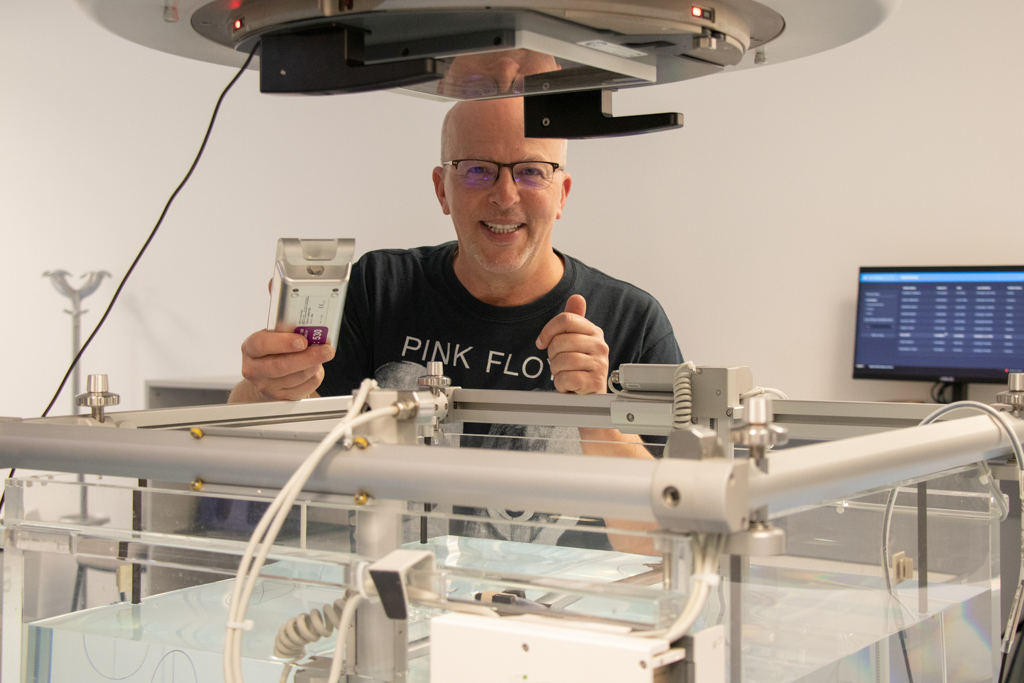
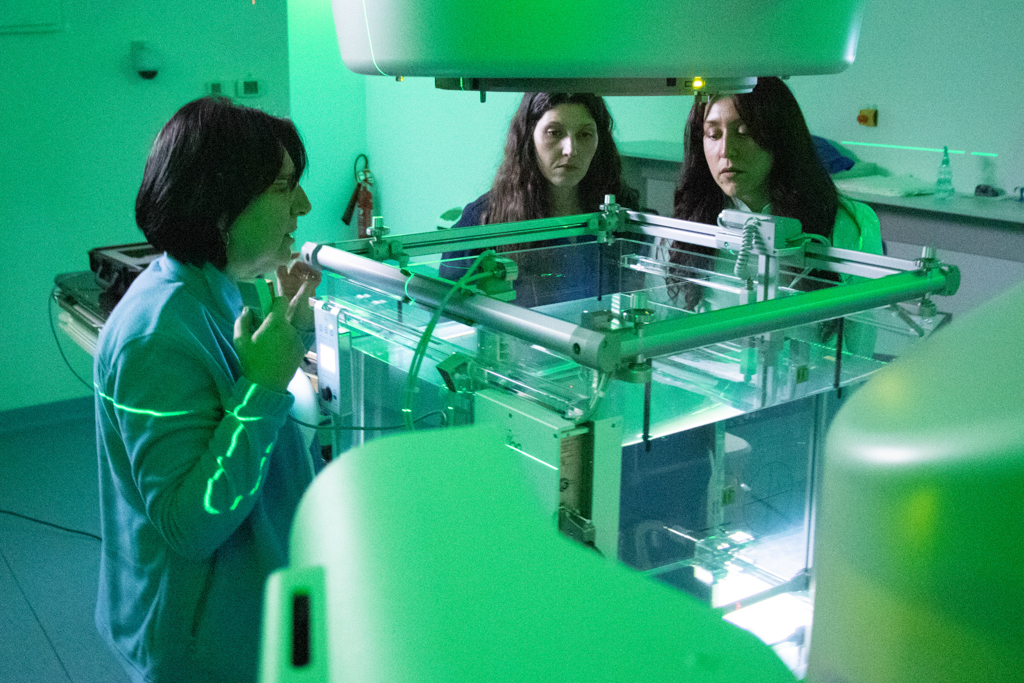 The road of physics application at the Rijeka Clinical Hospital Center was paved by two truly special persons, physicists, scientists and dear professors Neda Stipčić Šolić and Vesna Švarcer. Almost simultaneously, in the mid-1960s, they began their work in medical physics, actively participating in initiating new areas of ionizing radiation application in medicine of city of Rijeka – radiation oncology and nuclear medicine. During their many years of work, with their knowledge, wisdom, work ethic and enthusiasm, they laid the foundation for the work of physicists and the development of medical physics at the Clinical Hospital Center Rijeka. With everything we inherit from them, they enabled what the Medical Physics and Radiation Protection Department is today and what it may be in the future.
The Medical Physics and Radiation Protection Department is an organizational unit of the Clinical Hospital Center Rijeka. The essence of the Department’s existence is the application of physics for the purpose of imaging and therapy. This is reflected in the use of ionizing radiation and nuclear magnetic resonance, as well as the development and application of artificial intelligence. The Department consists of four organizational units of medical physicists for:
- Radiation Physics and Dosimetry
- Radiotherapy Physics
- Diagnostic Imaging Physics
- Quality of Radiological Procedures
The units are not disjoint sets, so most physicists participate in the work of at least two of them. The idea is the free flow of people and ideas in order to strengthen the capacity of the Department and each physicist individually. Each of the units separately and all of them together on daily basis ensure that the application of physics at the Clinical Hospital Center Rijeka contributes to the quality of imaging and therapy procedures. Primarily in radiation oncology, nuclear medicine, diagnostic and interventional radiology, but also in other areas. Physicists from the Department also actively participate in the consideration and implementation of the Quality Assurance Program of the Clinical Hospital Center Rijeka and manage the system of radiation protection .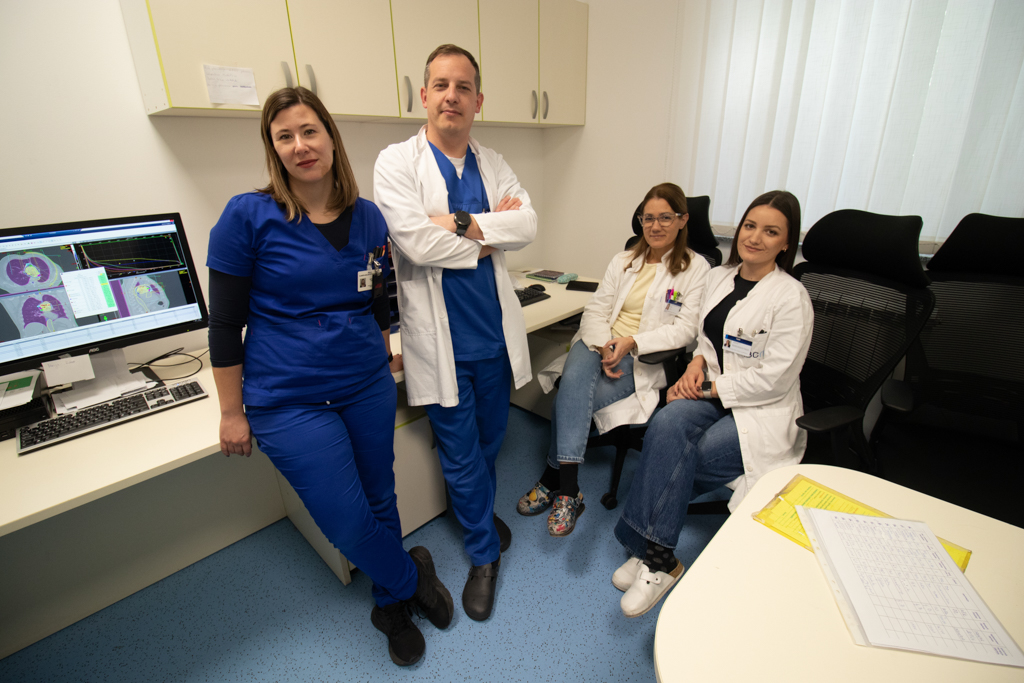
Shortly, Rijeka’s medical physicists work and do everything that is expected of physicists in university hospitals in European countries. This is largely because they have had the opportunity to stay and study in some of them (Amsterdam, Brescia, Brussels, Budapest, Florence, Ghent, Graz, Leeds, Leuven, Lund, Ljubljana, Olomouc, Milan, Novara, Pisa, Stockholm, Vienna…). Performing everyday clinical tasks is an essence of being a medical physicist. This implies carrying out numerous activities that fulfill the basic purpose of the work of a physicist in medicine. However, in addition to all this, physicists at the Department also strive to do something that could make a difference. This is an upgrade of the work of physicists in medicine, so it deserves to be mentioned a little.
The professional activities of the Department are (sometimes) also considered on a somewhat larger scale. Thus, a project to establish and implement a quality assurance program for the use of ionizing radiation and standardization of radiological procedures in public health institutions in the western region of the Republic of Croatia was proposed a long time ago. The cooperation lat up to this day, and in the meantime, it has been expanded a bit toward north. Now the program also includes quality assurance of nuclear magnetic resonance imaging.
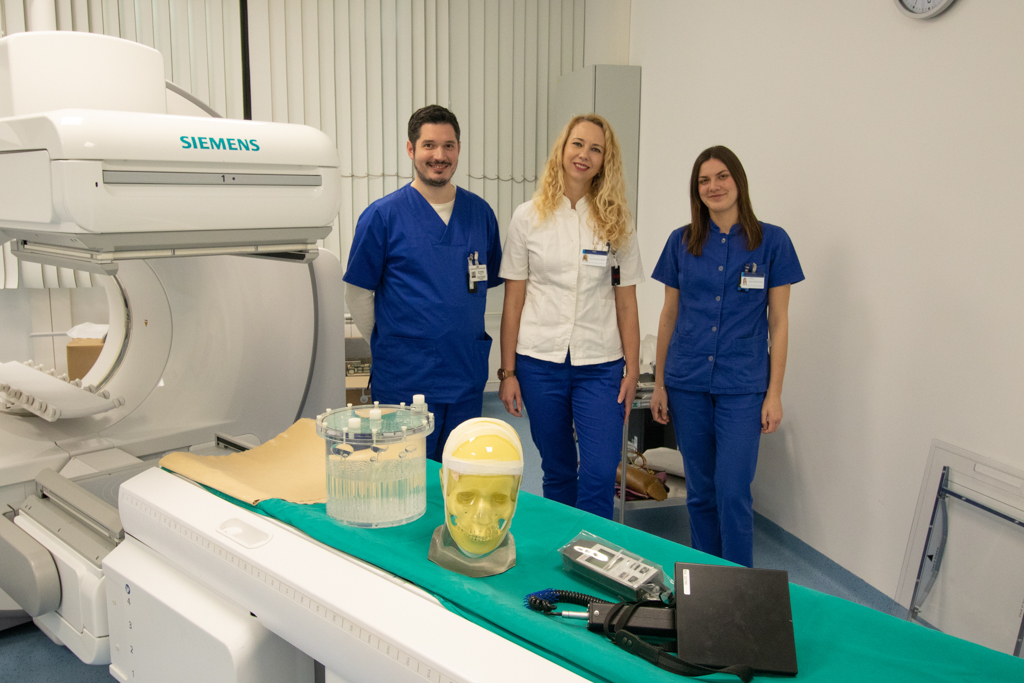 Physicists from the Department, through their scientific research and teaching work, are the essence of the existence of the Department of Medical Physics and Biophysics at the Faculty of Medicine, University of Rijeka. They teach in the university study programs of Medicine, Medical Laboratory Diagnostics, and Sanitary Engineering. At the Faculty of Health Studies, they teach in the Radiological Technology study program, and at the Faculties of Medicine of the Universities of Rijeka and Split, they participate in the implementation of the postgraduate study program of Clinical Radiology. The University Hospital Center Rijeka is a collaborating institution in the Doctoral Study Program in Physics, founded and run by the Faculty of Physics at University of Rijeka, so physicists from the Department are involved in the work of the doctoral study program.
The Department occasionally participates in popularization activities (by invitation). In the past, physicists from the Department participated in the Winter Schools of Physics organized by the Faculty of Physics of University of Rijeka, and visits were also organized to the Rijeka School of Natural Sciences and Graphics and the First Sušačka Croatian Gymnasium, while graduates of the Salesian Gymnasium visited the Department.
Physicists from the Department design, lead and conduct scientific research for the purpose of applying the results in their clinical work. Several studies have been conducted so far with the aim of examining the characteristics of computer algorithms built into treatment planning systems for radiation oncology. Research related to radiochromic film dosimetry and dosimetry of narrow beams of high-energy X-rays is being conducted in cooperation with the Institute of Oncology, Ljubljana, Slovenia (B. Casar, I. Mendez). The optimization of diagnostic procedures in nuclear medicine, especially those in myocardial perfusion, is marked by a multi-year collaboration with the Azienda Ospedaliero Universitaria Maggiore della Carità, Novara, Italy (R. Matheoud, M. Brambilla). In cooperation with the University of Lund, Sweden (M. Ljungberg), research related to the application of Monte Carlo algorithms in single-photon emission computed tomography is being conducted. There is also a long-standing collaboration with Massachusetts General Hospital/Harvard Medical School, Boston, USA (M. Kalra) on topics in the field of radiological diagnostics. In the last few years, in the field of nuclear magnetic resonance imaging physics, research and development of the method of determining the density of the bone part of the spine from the MR signal using neural networks for semantic segmentation and value prediction has been carried out.
A method of temperature measurement during nuclear magnetic resonance imaging using fiber optic probes in a special phantom is also being developed. This and some other phantoms were designed and made in the Laboratory for Modeling, Electronics, 3D Printing&Other, which operates within the Department. The laboratory is, in fact, a workshop where a stereolithographic 3D resin printer, together with tools for mechanical and manual material processing, enables one’s own development and production of phantoms, primarily for research purposes. The equipment for generating and processing electronic signals, on the other hand, is used for the calibration and development of measuring instruments for the work and research of medical physicists. The Department’s supercomputer (“Beast”) is used to perform complex calculations and simulations, as well as “education and training” of the so-called deep convolutional neural networks.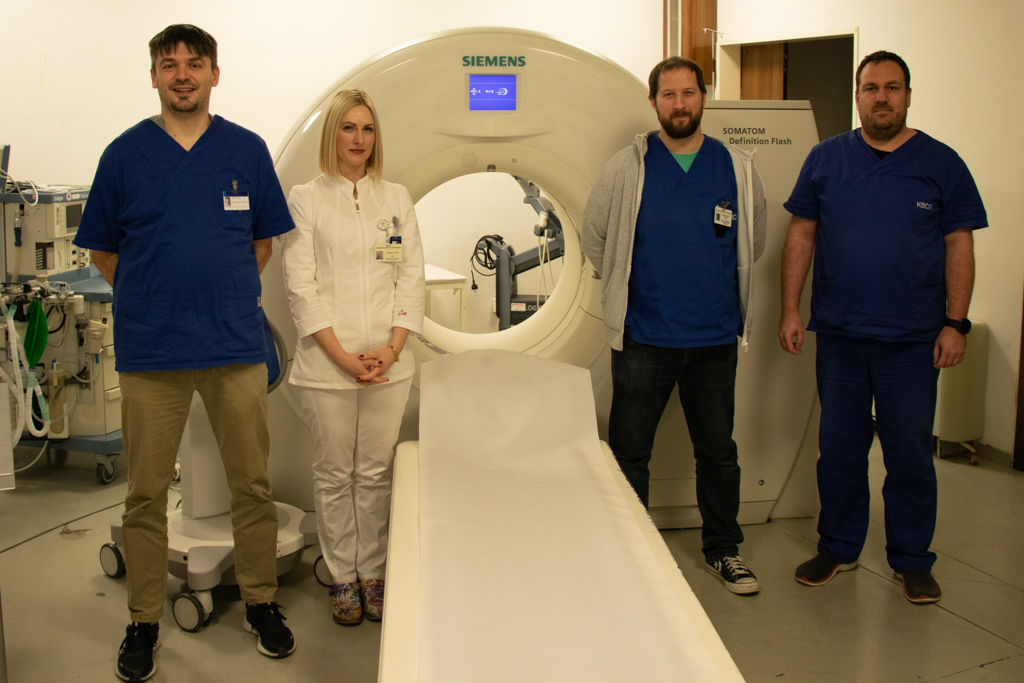
A significant part of the research conducted at the Department is related to the implementation of International Atomic Energy Agency (IAEA) projects. Project activities were devoted to the development of models and methodologies related to the use of ionizing radiation in the areas of activity of the Department, which contributed to the development and improvement of the application of physics at the Clinical Hospital Center Rijeka. Also, three projects from University of Rijeka were implemented, and the fourth should be implemented in the next four years.
Physicists from the Department publish research results in international scientific journals and regularly present them at gatherings of medical physicists abroad. Some of the many works of physicists from the Department were particularly noted at international conferences of medical physicists. Thus, in 2012, Ana Diklić’s work at the 5th Alpe Adria Medical Physics Meeting (Trieste, Italy, 2012) was chosen as the best work of young medical physicists, and this achievement was repeated by Kristian Stojšić at the 12th Alpe Adria Medical Physics Meeting (Trieste, Italy, 2025). The topic of Dea Dundara Debeljuh’s doctoral research was selected by the European Nuclear Education Network (ENEN) for presentation at the ENEN PhD Event&Prize 2024, which was held as part of the European Congress of Medical Physics (Munich, Germany 2024). Ivan Pribanić was the representative of the European Federation of Medical Physicists’ Organizations (EFOMP) at the European Young Nuclear Generation Forum (Zagreb, Croatia, 2025). Three doctoral research projects have been completed at the Department with doctoral dissertations defended at the Faculty of Science, University of Zagreb, and one at the Faculty of Medicine, University of Rijeka. Four doctoral research projects are currently underway, which are being conducted at the Department by doctoral students of the Faculty of Physics, University of Rijeka.
For the international recognition of excellence in the application of physics in medicine, the Department for Medical Physics and Radiation Protection of the Rijeka Clinical Hospital Center was awarded the annual award of the City of Rijeka in 2020 (https://kbc-rijeka.hr/godisnja-nagrada-grada-rijeke/).
[1] Legend said that Zlatko Bourek, the author-animator of the famous cartoon Professor Balthazar, used the city of Rijeka as a template for the Balthazargrad (https://rijeka2020.eu/program/djecja-kuca/izlozbe/51000-balthazargrad/)

CLINICAL HOSPITAL
CENTER RIJEKA
Medical Physics and
Radiation Protection Department
Krešimirova 42, 51 000 Rijeka,
Croatia
TEL: +385 (0)51 658-766
FAX: +385 (0)51 658-599
MAIL: radiofizika@kbc-rijeka.hr